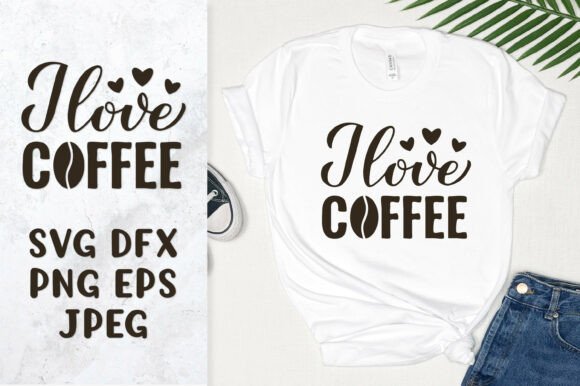
I Love Coffee SVG: A Designer's Review for Embroidery
As someone who spends half their life digitizing files and the other half staring at stitched samples under a magnifying lamp, I approach new design assets with a healthy dose of skepticism. We have all seen those cute graphics online that look perfect on a screen but turn into a tangled mess of thread once they hit the hoop. Today, I am taking a close look at the I Love Coffee SVG. Coffee Lover Design. While this file is marketed primarily as a cut file for vinyl and print, my job is to determine if it holds up as a viable machine embroidery design source for real-world projects.
The first impression of this graphic is its clean, approachable mood. It captures that cozy, caffeinated vibe that resonates with so many customers without feeling overly cluttered. The layout typically features bold typography paired with a simple coffee cup icon or steam motif. For an embroiderer, this simplicity is a double-edged sword. On one hand, fewer details mean less chance of registration errors. On the other, the thickness of the lines in the original Illustrations category file dictates how we must adapt it for stitching. If you are planning to use this for a custom apparel line or a batch of personalized gifts, you need to understand that what works for a printer does not always work for a needle.
From Screen to Stitch: Real-World Application
Let's talk about a specific scenario. Imagine a local café owner approaches you to create branded merchandise. They want a run of canvas tote bag designs and perhaps some aprons for their baristas. The I Love Coffee SVG. Coffee Lover Design is an excellent candidate here because the theme is universal. However, before you commit to stitching fifty bags, you must consider the transition from a vector digital embroidery file concept to actual thread.
When adapting this graphic, the visual personality shines best on medium-weight fabrics. A heavy cotton tote or a fleece sweatshirt embroidery project provides enough stability for the shapes to hold their form. If you were to attempt this on a thin, stretchy jersey tee without proper stabilization, the "coffee" text might pucker, ruining the professional look. The design's strength lies in its readability. Customers walking past a craft fair booth or browsing an Etsy seller's shop need to grasp the message instantly. This design delivers that clarity, provided the stitch types are chosen wisely.
For a handmade product intended as a holiday embroidery gift, such as a kitchen towel or a mug cozy, the scale matters. The original SVG might be large, but shrinking it down for a small item requires careful attention to the smallest elements. If the design includes fine steam lines or tiny hearts, these might need to be thickened or converted to a running stitch outline rather than a dense fill stitch to prevent them from disappearing into the fabric texture.
Navigating Fabric Challenges and Hoop Limits
One of the most critical aspects of using a graphic like this for commercial purposes is knowing where not to use it. While the I Love Coffee SVG. Coffee Lover Design is versatile, it has limitations when applied to difficult surfaces. For instance, curved surfaces like caps present a unique challenge. The curvature can distort the straight lines of the text, making the quote look warped. Unless you are experienced with cap framing and can adjust the pull compensation in your digitizing software, I would advise sticking to flat goods like pillow covers or patches for this specific graphic.
Texture is another factor. If you are working with a highly textured fabric, like a waffle knit or a looped towel, the details of the design can get lost. In these cases, increasing the stitch density slightly or opting for an applique design approach could save the project. By cutting a fabric shape for the coffee cup and stitching over it, you add dimension and ensure the design pops against the busy background. This technique also reduces the amount of thread needed, which can be beneficial for larger production runs in a small shop product lineup.
Dark fabrics require special consideration regarding thread colors. The original file likely assumes a white or light background. When moving to a navy or black garment, you cannot simply stitch the design as-is; you may need to add an underlay or a backing patch to ensure the colors remain vibrant and do not blend into the garment. Testing the design in black and white mockups before purchasing thread is a smart move to check contrast levels.
Enhancing Brand Value and Customer Trust
Ultimately, the goal of any embroidery project is to create a finished product that looks professional and builds trust. Using a well-chosen graphic like the I Love Coffee SVG. Coffee Lover Design can elevate your brand consistency. If you specialize in kitchenware or café-themed goods, having a cohesive set of items featuring this motif helps buyers recognize your work. It signals that you understand current trends and can deliver high-quality commercial embroidery that matches market demand.
However, professionalism also means honesty about limitations. If the design includes tiny lettering that you know will not stitch out clearly on a certain fabric, do not promise it to a client. Instead, suggest modifications. Perhaps the text can be enlarged, or the font changed to a bolder style that mimics the original vibe but is more stitch-friendly. This level of consultation adds value to your service and ensures the customer receives a durable item that withstands frequent washing.
Practical Notes for the Smart Designer
Before you dive into production, here are a few essential steps to take with this file. First, remember that the product description lists formats like DXF, PNG, JPEG, and EPS10. These are primarily vector and image formats for cutting machines and printers. They are not native embroidery files (like PES, DST, or XXX). You will need to digitize the artwork yourself or hire a digitizer to convert the Graphics into a stitch file. Do not assume the SVG will open directly in your embroidery machine.
- Test on scrap fabric: Always stitch a sample on the exact same material you plan to use for the final product. Fabric tension varies wildly between cotton, polyester, and blends.
- Check stabilizer compatibility: For stretchy fabrics like those used in baby embroidery or athletic wear, a cut-away stabilizer is often necessary to prevent distortion over time.
- Verify licensing: The description mentions making t-shirts and stickers for sale, but always double-check the specific license terms regarding commercial use. Some creators allow physical sales but restrict digital resale.
- Inspect small details: Look closely at the connection points between letters and the cup icon. In embroidery, floating elements need tie-ins or bridges to stay secure.
- Confirm hoop size: Ensure the scaled design fits within your available hoop sizes, especially if you are working with smaller items like socks or baby bibs.
In conclusion, the I Love Coffee SVG. Coffee Lover Design is a strong contender for your creative toolkit, provided you treat it as a starting point rather than a finished solution. With thoughtful adaptation, attention to fabric choice, and proper digitizing techniques, it can become a staple in your inventory of printable mockup ready products and stitched goods. Whether you are creating a single embroidered patch for a friend or launching a full collection of café gear, this design offers the charm and versatility needed to succeed in today's craft market. Just remember, the difference between a good design and a great embroidered product lies in the preparation and the respect for the medium of thread.