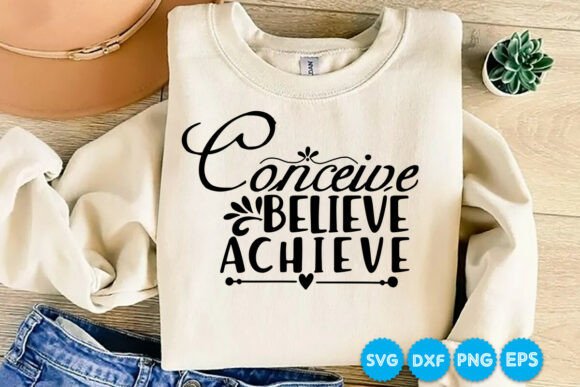
Review: Conceive Believe Achieve SVG for Embroidery
As a designer who spends more time staring at stitch maps than most people spend watching television, I approach every new Conceive Believe Achieve Svg Design with a mix of optimism and skepticism. We have all seen motivational quotes turned into embroidery disasters—text that becomes an illegible blob, spacing that throws off the balance, or layouts that simply do not translate well from a flat screen to a textured fabric. However, after spending some time analyzing this specific set of Graphics within the T-Shirt Designs category, I found a versatile asset that holds up well under professional scrutiny, provided you understand how to prep it for the hoop.
The first impression of the Conceive Believe Achieve Svg Design is one of clean, modern minimalism. The typography feels sturdy without being heavy, which is crucial when you are dealing with thread rather than ink. In a digital mockup, sharp lines look crisp, but in embroidery, those same lines need enough width to hold a satin stitch or a tight fill stitch without collapsing. This design seems to respect those physical limitations. The layout suggests a natural flow that would work beautifully on a variety of substrates, from the structured canvas of a tote bag to the soft drape of a cotton sweatshirt.
Real-World Application: The Boutique Sweatshirt Test
To truly evaluate this file, I imagined a real-life scenario that many of us face daily: a rush order for a local boutique needing a line of "manifestation" themed apparel. The client wanted something uplifting but not overly childish or cliché. This is where the Conceive Believe Achieve Svg Design shines. Picture a heather grey crewneck sweatshirt. You digitize the text using a slightly raised fill stitch for the words "Conceive" and "Achieve," perhaps using a contrasting thread color like deep navy or forest green against the grey. The word "Believe" could be rendered in a lighter weight or a script variation if the specific SVG layering allows for it, creating visual rhythm.
The result is a finished product that feels premium. Unlike cheap heat transfers that crack after three washes, a properly stitched version of this design adds tangible value to the garment. For an Etsy seller or small shop product creator, this kind of quality builds customer trust. When a buyer runs their hand over the embroidery and feels the texture of the threads rather than a plastic film, they perceive the item as a true handmade product. This design fits perfectly into the current trend of mindfulness and self-care, making it an ideal candidate for holiday embroidery gifts, teacher appreciation presents, or even wedding gifts for couples starting a new chapter.
Navigating Fabric Textures and Hoop Constraints
While the design is strong, no machine embroidery design is universal without adjustments. One area requiring careful attention is the choice of fabric. If you are planning to use this on a tote bag design made of heavy canvas, you are in the clear; the fabric can support the density of the stitches. However, if you are attempting this as baby embroidery on a delicate onesie, you must proceed with caution. The lettering, while clear, needs to be checked for minimum stroke width. If the lines are too thin, they may pucker the lightweight knit fabric regardless of how good your stabilizer is.
Similarly, curved surfaces like caps present a challenge. Placing a three-line quote on the front panel of a baseball cap requires precise centering and potentially breaking the design into smaller sections if the hoop size is restrictive. Always test the design on scrap fabric that matches your final material. This is non-negotiable for maintaining professionalism in commercial embroidery. Check how the thread colors interact with the background; a dark thread on a dark fabric might lose the definition of the letters, while a light thread on a sheer fabric might show the backing material through the gaps.
Digital Versatility and Commercial Potential
Beyond the needle and thread, the inclusion of vector files (SVG and DXF) alongside the high-resolution PNG makes this a robust package for creative entrepreneurs. The SVG file being layered and editable is a significant plus. It means you can separate the elements to create variations—perhaps using just "Believe" for a smaller pocket logo or rearranging the stack for a vertical layout on an apron. This flexibility extends the life of the design assets far beyond a single project.
For those who sell digital products or printable mockups, the 300 dpi PNG with a transparent background is ready for immediate use in listing photos. You can create compelling printable mockup images that show exactly how the design will look on a pillow cover or kitchen towel without ever stitching a single thread. This helps in pre-selling items or building a cohesive brand aesthetic on social media. However, remember that while the graphic is ready for print-on-demand services, the primary value here lies in its potential as a source for physical embroidery.
Critical Designer Notes for Success
Before you commit this design to a client's expensive jacket or a batch of inventory, keep these practical tips in mind:
- Check the License: Always verify the specific licensing terms included with the download. While many such designs allow for commercial use on finished physical goods, restrictions on reselling the digital file itself are standard.
- Digitizing Review: Even though you receive an SVG, if you are feeding this directly into an embroidery machine software, ensure the auto-digitizing settings are appropriate. You may need to manually adjust the stitch density to prevent puckering, especially in the corners of the letters.
- Stabilizer Selection: For stretchy fabrics like t-shirts or sweatshirts, a cut-away stabilizer is often safer than tear-away to prevent distortion over time. For woven fabrics like towels or aprons, a high-quality tear-away usually suffices.
- Contrast Testing: View your design in black and white before stitching. If the design loses its shape or legibility in grayscale, it might struggle with thread contrast on certain fabric textures.
- Small Details: Inspect the tiny serifs or connecting points in the font. If they are too small, consider simplifying them or increasing the size of the overall design to ensure clean running stitch outlines.
In conclusion, the Conceive Believe Achieve Svg Design is a solid addition to any designer's library. It bridges the gap between trendy digital aesthetics and the tactile requirements of embroidery. Whether you are creating a personalized gift for a friend or scaling up production for a craft business, this design offers the clarity and style needed to produce high-quality results. Just remember that the file is only half the battle; your expertise in fabric selection, stabilization, and stitch planning is what will ultimately turn this graphic into a standout piece of wearable art.